Choosing the Right Boulder Mountains Home Style
June 4, 2026
June 4, 2026
If you have started looking at homes near Boulder’s foothills, you have probably noticed something right away: “mountain home” can mean very different things. One property feels like a tucked-away cabin in the trees, another looks like an alpine chalet with soaring ceilings, and a third reads as sleek, airy, and distinctly modern. In Boulder, the right choice is not just about style. It is also about access, maintenance, wildfire readiness, and how you actually want to live. Let’s dive in.
Boulder mountain living is shaped by the land itself. Boulder County includes dense urban areas, rural buffer zones, and mountain communities, while the City of Boulder’s Open Space and Mountain Parks system manages more than 45,000 acres and about 155 miles of trails. That setting is a big reason buyers focus so closely on views, privacy, trail access, and the way a home sits within the landscape.
This also means mountain homes near Boulder rarely fit one simple mold. You may be comparing a woodsy foothills retreat in 80301 with a more contemporary home on the open-space edge, or looking at nearby mountain communities where the setting feels more remote. The architecture matters, but the relationship between the home and the site often matters just as much.
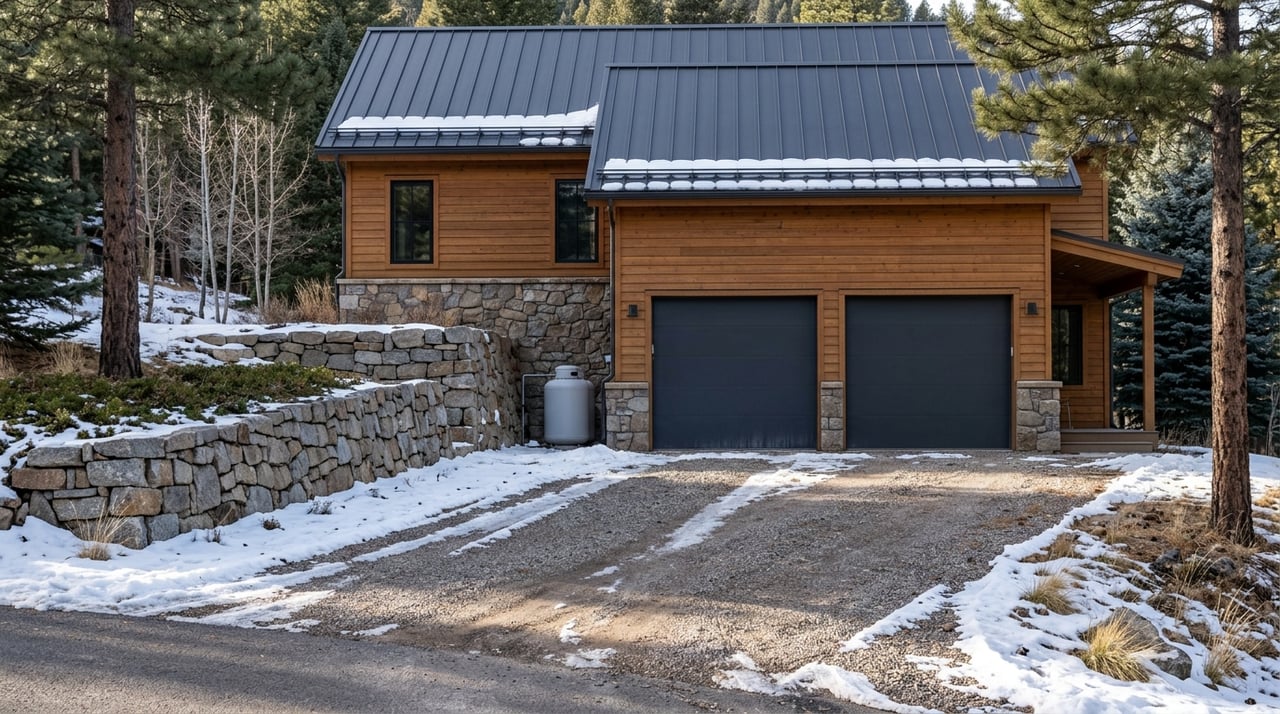
Ownership here also comes with practical realities that are easy to miss in photos. Boulder County maintains about 700 miles of roadway, and nearly half is gravel. The county also notes that snow plows may not reach some subdivisions and mountain roads until after higher-priority roads are safe, which can shape your day-to-day experience more than any design feature.
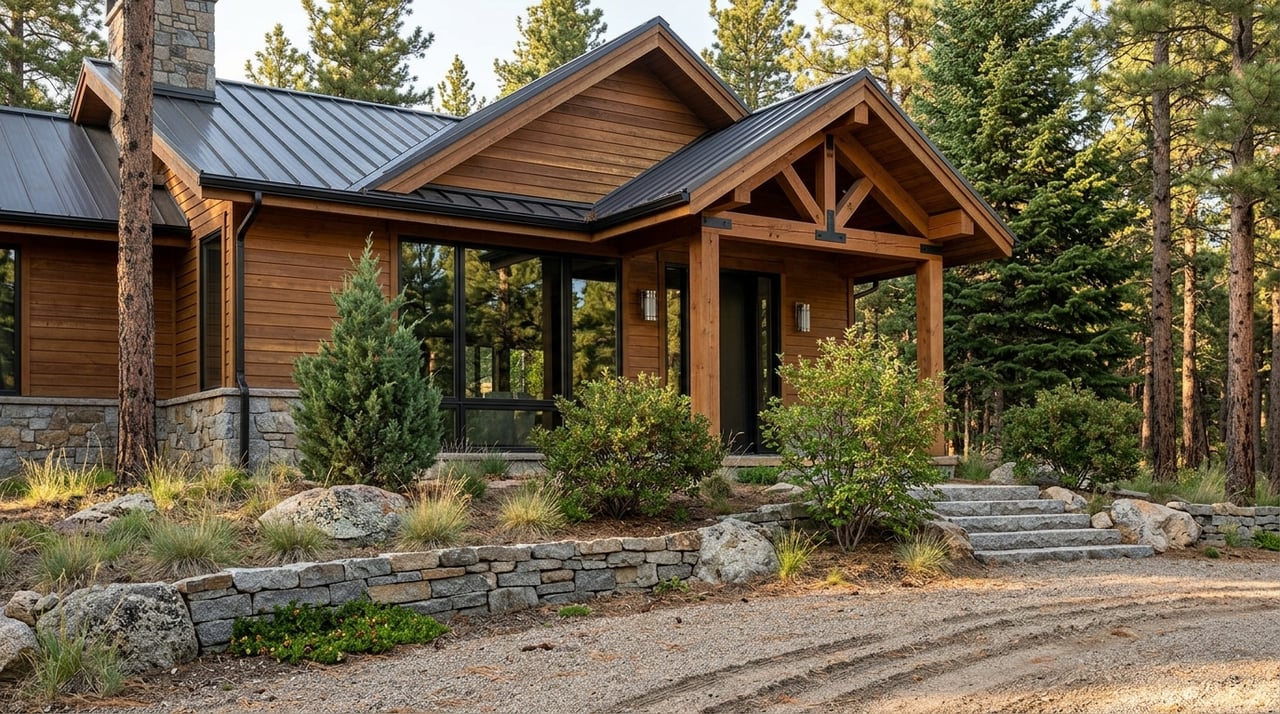
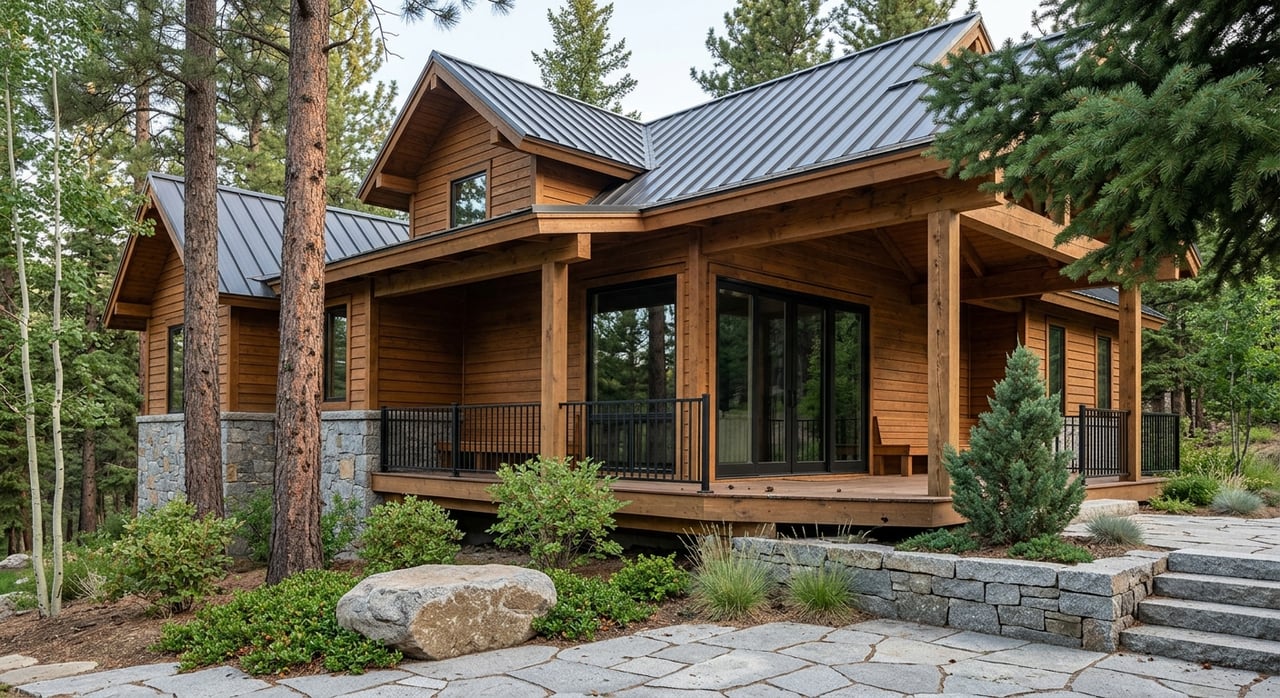
A rustic cabin usually delivers the most classic mountain feeling. This style is defined by natural materials like log and stone, and it is often designed to blend into the environment rather than stand apart from it. Around Boulder, that often means visible beams, wood-forward interiors, fireplaces, and a cozy connection to the outdoors.
For many buyers, cabins carry instant emotional appeal. They feel intimate, relaxed, and retreat-oriented, which makes them especially attractive as weekend homes or lifestyle properties. If you picture mornings by the fire and evenings on a deck surrounded by trees, this style often fits that vision best.
The tradeoff is upkeep. Wood-heavy exteriors typically need regular care over time, and log-cabin research from the U.S. Forest Service highlights the importance of exterior finishing and maintenance to help prevent decay. In simple terms, a rustic cabin often offers the most character, but it may also ask more of you as an owner.
Rustic cabins tend to work well if you want:
If your goal is atmosphere first, a cabin may be the style that feels most emotionally right.
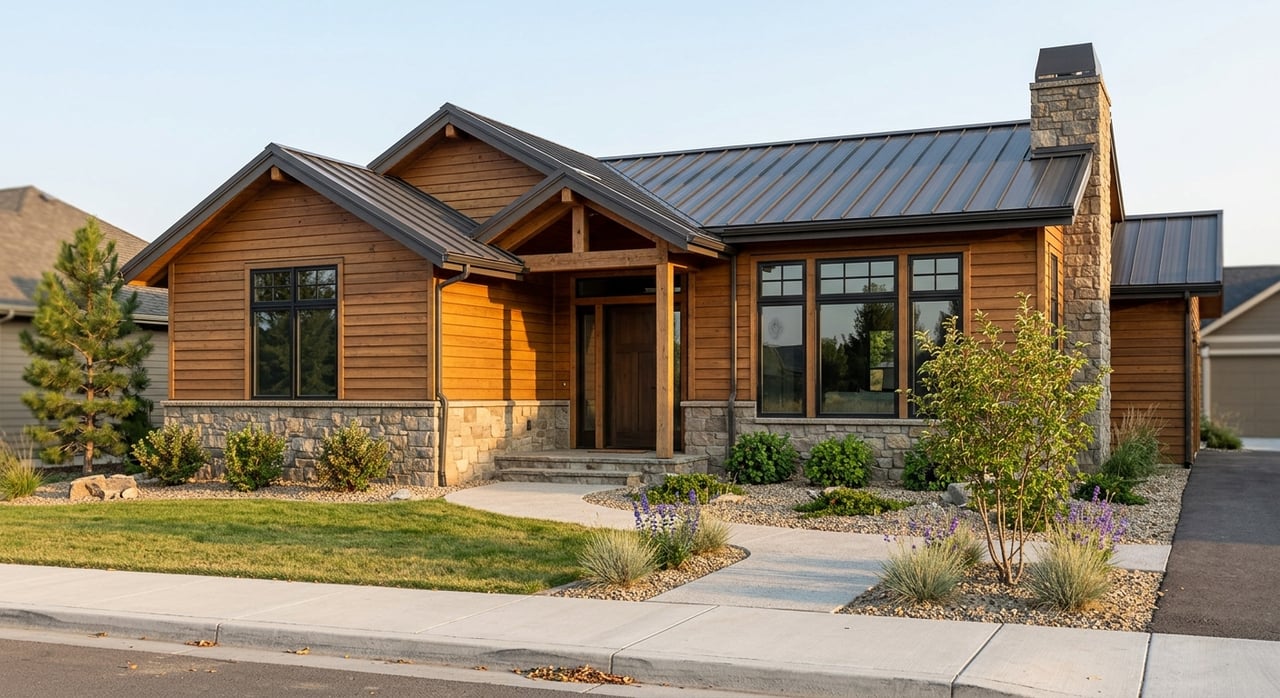
A chalet is usually easier to spot from the outside. Chalet-style homes are timber-framed mountain houses with dramatic pitched roofs, overhanging eaves, exposed wood, and often a stone or concrete foundation. Historically, the form was designed for steep terrain and cold climates, and that roof shape is especially well suited to shedding snow.
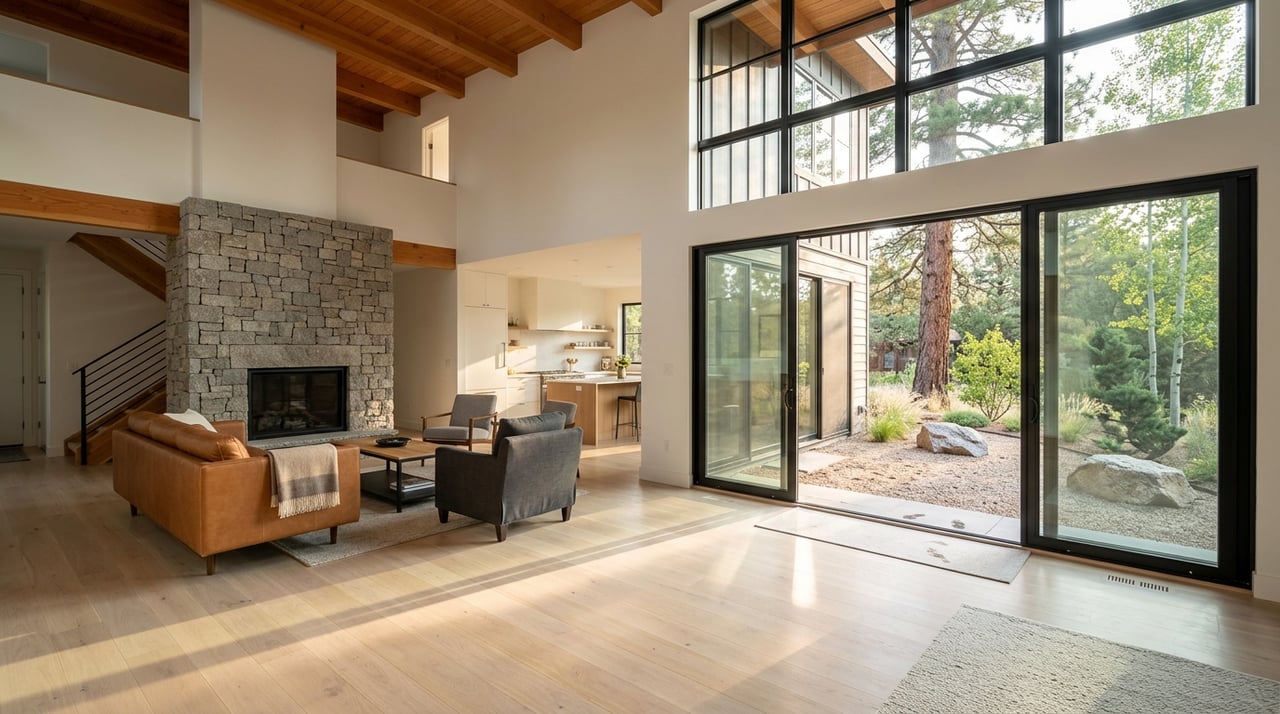
In the Boulder area, an updated chalet often keeps that classic alpine silhouette while softening the interior feel. You may see larger windows, open great rooms, vaulted ceilings, balconies, and a brighter, more current finish palette. The result is a style that still feels distinctly mountain-oriented without reading as heavy or overly rustic.
This middle ground is part of the appeal. An updated chalet often gives you architectural presence and a communal layout that works well for gatherings, weekend hosting, or full-time living. It can feel more open than a cabin while still holding onto traditional mountain warmth.
A chalet may be a strong fit if you want:
Like other timber-forward homes, chalets still need regular care. Large window areas can also affect heating and maintenance considerations, so it is smart to look beyond the visual wow factor.
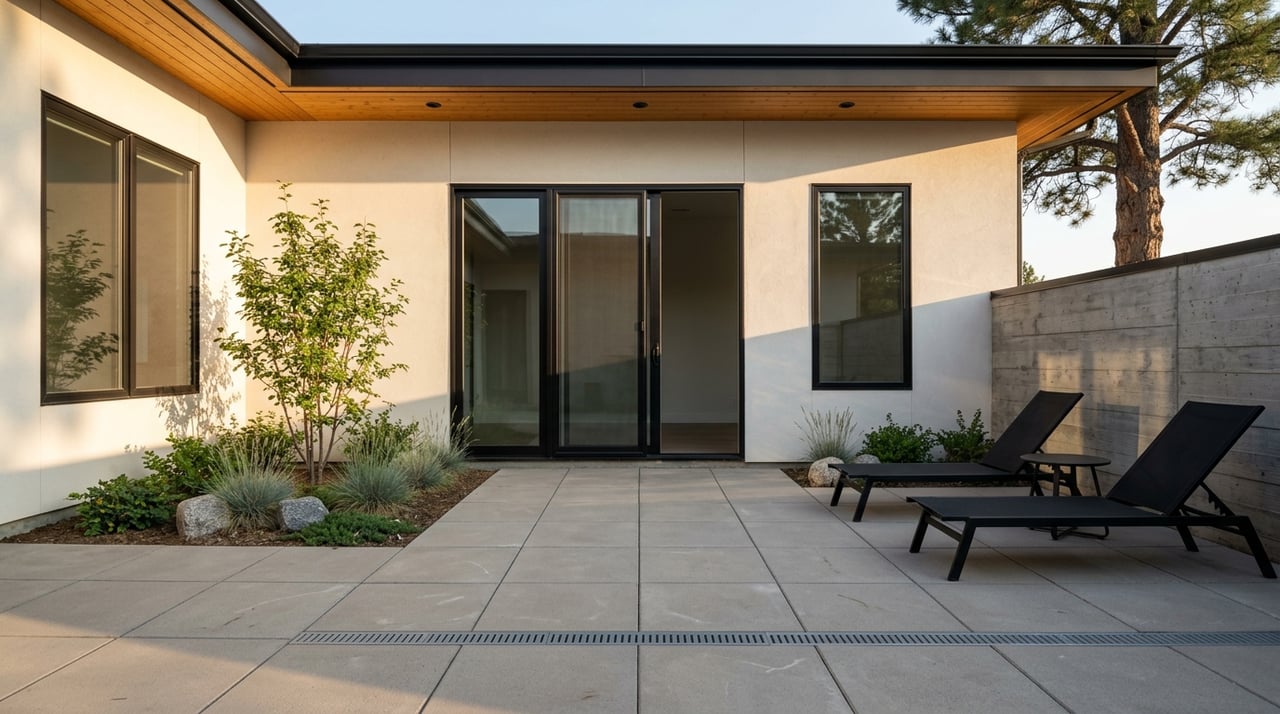
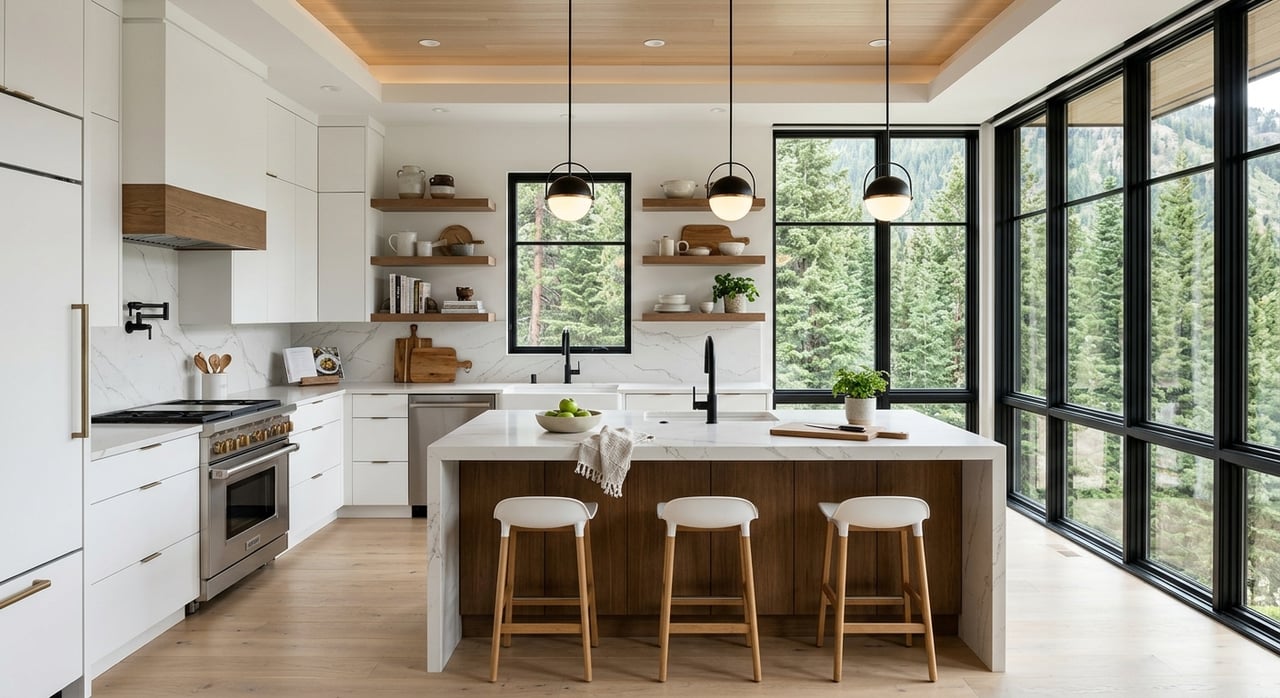
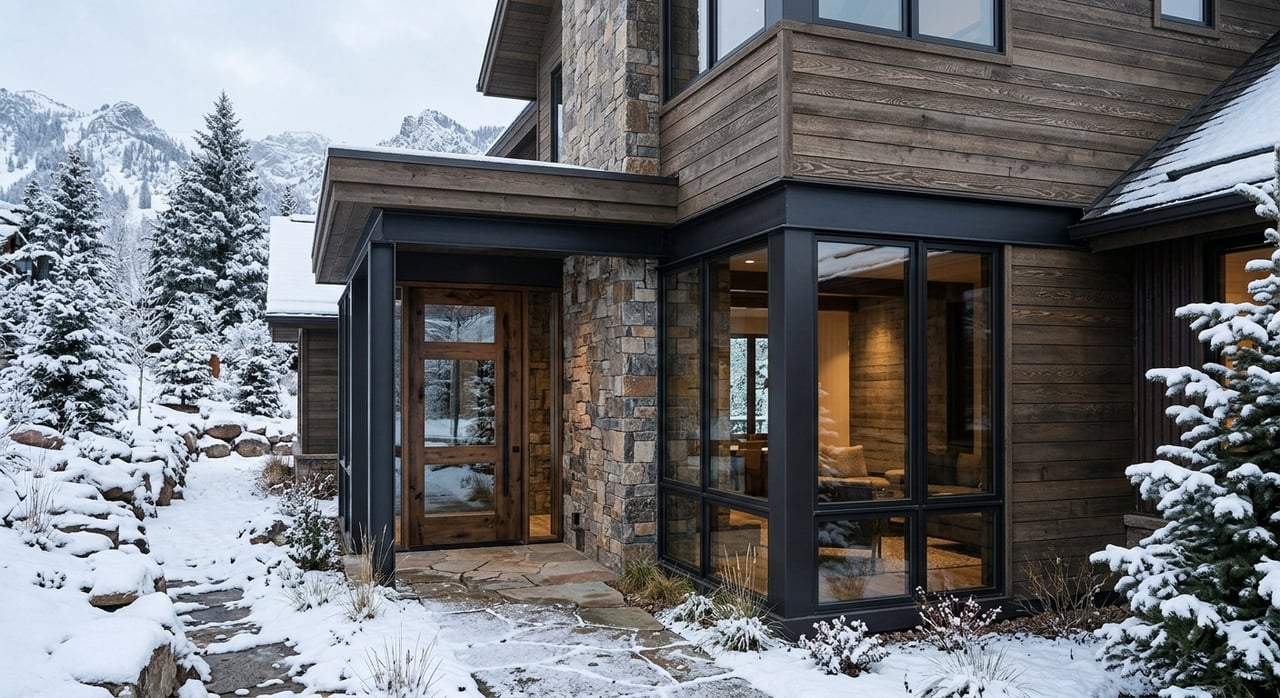
Mountain-modern homes blend rugged natural materials with clean, contemporary design. In practice, that often means grounded materials, simple forms, expansive windows, lots of natural light, and a neutral palette that keeps the focus on the landscape. These homes are designed to feel connected to the mountains without relying on traditional lodge details.
This style also reflects how many people live in the mountains today. Mountain-modern homes often include mudrooms, gear storage, durable finishes, and easy indoor-outdoor flow. If you want a home that supports hiking, pets, entertaining, and frequent weekend use without feeling overly formal, this style often makes a lot of sense.
For many buyers, mountain-modern feels the easiest to live with day to day. That does not mean maintenance-free, though. Good detailing still matters, especially around glass, roofs, decks, vents, and defensible space.
Mountain-modern often appeals if you want:
If you are looking for a year-round home or a second home with a more current layout, this style often rises to the top.
The easiest way to compare these styles is to think of them as different ownership experiences. A rustic cabin leans toward nostalgia and retreat value. An updated chalet balances classic alpine character with communal living space. A mountain-modern home tends to prioritize everyday function and contemporary comfort.
Here is a simple side-by-side view:
| Style | Best known for | Often best for | Main tradeoff |
|---|---|---|---|
| Rustic cabin | Log-and-stone character, cozy retreat feel | Buyers who want atmosphere and a tucked-away setting | More regular exterior upkeep |
| Updated chalet | Steep rooflines, alpine presence, open great rooms | Buyers who want classic mountain form with a brighter interior | Ongoing care for timber and large window areas |
| Mountain-modern | Clean design, light, durable living spaces | Buyers who want a current layout and year-round usability | Careful detailing still matters for long-term performance |
In Boulder’s mountain settings, style is often a proxy for maintenance tolerance. The home with the strongest views is not always the easiest one to own. The best choice is usually the one that matches your lifestyle, your design taste, and the level of upkeep you are truly comfortable with.
No matter which style you love, Boulder buyers should look closely at the practical side of mountain ownership. These details can shape convenience, safety, and future costs.
Ask who maintains the road and what winter access really looks like. Boulder County says some mountain and subdivision roads are plowed only after higher-priority routes are safe. It also notes that some local access roads do not receive major county resurfacing.
That matters if you plan to live in the home full time, commute regularly, or use it often in winter. A beautiful setting can feel very different if access changes significantly with weather.
Wildfire readiness is a baseline issue in Boulder mountain areas. Boulder County says it ranks among the top 10 most-at-risk areas from wildfire in the USDA Forest Service’s Rocky Mountain Region, and county code requires wildfire mitigation for new buildings, additions, alterations, and repairs. Colorado also adopted the statewide Colorado Wildfire Resiliency Code on July 1, 2025.
As you evaluate a property, ask for documentation of mitigation work, defensible-space maintenance, and permit history tied to improvements. This is especially important if you are considering an older cabin or a home you may want to renovate.
Utilities can differ widely from one property to the next. Boulder County says groundwater well permits are issued by the Colorado Department of Natural Resources, while onsite wastewater treatment systems are regulated locally by Boulder County Public Health.
If a property is in a rural or unincorporated area, confirm early whether it uses municipal service, a private well, an onsite wastewater system, or some combination. This is one of the most important behind-the-scenes details to understand before you move forward.
If you are drawn to a dated home with plans to transform it, verify what will be required before you fall in love with the project. Boulder County says building permits are required for construction that physically changes or adds structures to a property, and wildfire review can be part of that process.
This is especially relevant if you are hoping to turn a traditional cabin into a more contemporary retreat. Renovation potential can be exciting, but it should be matched with a clear understanding of what is feasible.
In Boulder, mountain architecture is never just about appearance. A cabin, chalet, or mountain-modern retreat each tells you something about how the home may live, how it may age, and what kind of ownership experience you can expect. The right fit comes from balancing design appeal with access, systems, resilience, and long-term comfort.
That is where local knowledge becomes especially valuable. When you understand both the visual language of a home and the practical realities behind it, you can choose with much more confidence.
If you are weighing mountain home styles in Boulder or the foothills, Candace Newlove Marrs offers a thoughtful, design-aware perspective backed by deep transaction experience and local market knowledge.
Stay up to date on the latest real estate trends.
Combining decades of real estate expertise with a passion for making dreams come true, Candace simplifies the journey to discovering your ideal home.