Buying a Home in Nederland: What to Know First
June 11, 2026
June 11, 2026
Buying in Nederland can feel like a dream and a reality check at the same time. You get mountain-town character, easy access to trails and open space, and a housing stock filled mostly with standalone homes, but you also need to think carefully about zoning, winter access, utilities, and wildfire readiness before you write an offer. If you are considering a primary home, cabin, or second-home retreat here, this guide will help you focus on the practical details that matter most. Let’s dive in.
Nederland is a small mountain town that serves about 1,500 residents, with roughly 4,000 more people connected to the surrounding county and mountain communities. The town is closely tied to outdoor recreation, with access to trails, open space, hiking, skiing, camping, and the broader Front Range mountains.
For many buyers, that lifestyle is the draw. But mountain ownership often comes with a different set of questions than you might ask in Boulder or other Front Range communities. In Nederland, parcel-level due diligence matters because road conditions, lot configuration, utilities, and seasonal weather can all shape how a home lives day to day.
Nederland’s housing stock is overwhelmingly made up of single-unit detached homes. According to the town’s housing needs assessment, 94% of the local housing stock falls into that category, which helps explain why buyers here tend to see more cabins, mountain houses, and standalone residences than dense condo or townhouse options.
That pattern can be appealing if you want more separation, a more residential feel, or a classic mountain-home setting. It also means inventory may look and function differently than what you would expect in a more urban market, especially if you are comparing Nederland with Boulder-area neighborhoods that have more attached housing.
Some of Nederland’s older residential areas were built around narrow lots, commonly 40 feet wide by 100 feet deep. Homes were often set back from the street, and that older development pattern still shapes how some streets feel today.
For you as a buyer, that can influence practical questions like driveway placement, parking, and where snow can be stored in winter. A home may look charming on paper, but the lot layout can make a big difference in how easy it is to access and maintain over time.
Nederland’s zoning code sets different minimum lot areas depending on the district. Mountain Residential requires 1 acre, Low Density Residential requires 16,000 square feet, Medium Density Residential requires 8,000 square feet, and High Density Residential and Neighborhood Commercial require 4,000 square feet.
The town also notes that some existing lots are legally nonconforming. That does not automatically make a property a poor fit, but it does mean you should understand how the parcel sits under current zoning if you may want to remodel, expand, or change the property later.
In Nederland, planning questions are not just for developers or major custom builds. The town reviews land-use development applications for compliance with municipal code, and that process can affect new homes, additions, remodels, multifamily projects, commercial properties, and mixed-use work.
That matters because your future plans for the home should be part of your buying decision. If you already know you may want to add a garage, update siding, replace windows, or take on a larger renovation, it is smart to verify what the town may require before closing.
The town states that new residential or commercial projects, sensitive-land work, and renovations involving 20% alteration or more require a concept or site plan review before permit filing. New builds may also need a recent survey or an Improvement Location Certificate.
Nederland also offers a one-stop permit path for some common projects, including electrical service changes, siding, furnace replacements, windows and doors, reroofs, water heaters, and demolitions. In some cases, the town says one-stop permits can be processed the same day, which can be helpful if you are planning targeted post-closing improvements.
In a mountain market like Nederland, wildfire planning is not an optional extra. The town requires defensible space on new or remodeled buildings, and wildfire-mitigation plans are reviewed through the Nederland Fire Protection District.
If you are buying a home that you may update over time, you should look at wildfire readiness as part of the normal ownership picture. Existing defensible space, tree management, access routes, and future mitigation work can all affect your budget and your plans for the property.
Nederland ownership is shaped by winter in a very real way. Most local roads are maintained by the Town of Nederland, while major roads and highways are handled by CDOT or Boulder County.
The town’s snow response is priority-based. Plows are generally dispatched when snowfall reaches 4 inches by 3 a.m. on weekdays or 6 inches by 5 a.m. on weekends, and primary routes are cleared before secondary and tertiary routes.
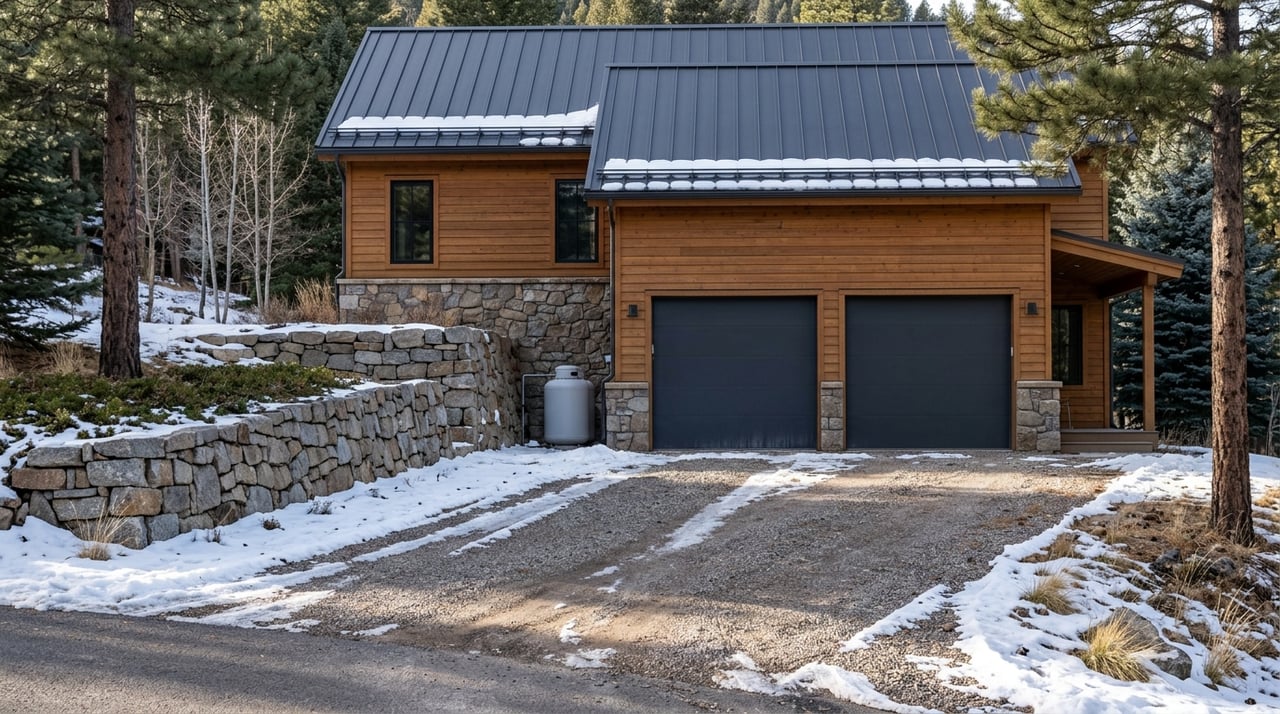
The town cannot provide driveway clearing or special plow requests, so your driveway setup matters. You will want to think about slope, turn radius, snow storage, and how easy it is to get in and out during a storm.
Parking also becomes a practical ownership issue in winter. Nederland prohibits parking on town roads during snow events or when snow accumulation exceeds 6 inches, and the town states that damage to vehicles parked in the right-of-way, or to driveway edges in the right-of-way, is not the town’s responsibility.
Nederland requires culverts for existing driveways and new drives that access public streets, roads, or rights-of-way. That makes drainage, runoff, and driveway design part of the bigger ownership picture.
If you are evaluating a property, it is worth asking how the driveway handles melt, runoff, and plow season. In mountain settings, these details can affect maintenance, usability, and cost more than buyers initially expect.
Nederland’s Public Works department handles a wide range of services, including water treatment, water distribution, wastewater collection and treatment, stormwater collection, streets and rights-of-way, parks and trails, and construction inspection. The town also states that property owners are responsible for repair and maintenance of their water service lines.
That is a good reminder that utility questions in a mountain town should go beyond monthly usage. You should understand who provides service, where responsibilities begin and end, and how a property’s location may affect recurring costs.
Water and sewer base fees are billed quarterly even when a property has no usage. For 2026 residential customers, in-town base fees are $49.20 for water and $175.71 for sewer, while out-of-town base fees are higher at $73.80 for water and $263.57 for sewer.
Usage charges are added on top of those base fees. If you are comparing homes near town limits, one of the first questions to ask is whether the property is inside town limits or outside them, because rates and service responsibilities can change.
Nederland’s drinking water comes from Middle Boulder Creek and is treated at a local plant. The system is distributed through storage tanks, booster stations, and more than 16 miles of pipe, and the town keeps backup generators at the treatment plant and pump stations.
That local infrastructure matters in a mountain community where outages and emergency conditions can interrupt normal service. It is one more reason to understand how a home is served and what backup planning may be wise for your household.
In Boulder County, property taxes are distributed to multiple taxing entities. These can include school districts, fire protection districts, municipalities, and water districts.
For you as a buyer, the takeaway is simple: do not assume a parcel has a straightforward county-only tax picture. It is worth verifying the actual tax districts tied to the property so you know what you are paying for and how the total bill is structured.
If part of your buying strategy includes future rental income, check short-term-rental rules early. Nederland states that it is unlawful to operate or advertise a short-term rental without a license, and the town clerk handles that licensing program.
The town also charges a lodging occupation tax on stays under 30 days. Just as important, the licensing rules are not the same for every property.
Primary-residence licenses can allow unlimited days. Certain non-primary-resident licenses are limited to properties in the Central Business District or General Commercial districts.
That zoning connection is critical if you are buying a second home and hoping it could become an income-producing property later. Before you rely on future rental potential, confirm both the zoning and the license type that may apply.
A thoughtful Nederland home search usually includes more than the usual inspection and financing steps. It also includes practical questions about how the property will function across all four seasons.
Here are some of the most important questions to ask as you evaluate a home:
Nederland can be an exceptional place to buy if you love mountain living and understand the tradeoffs that come with it. The homes, lots, and lifestyle can be incredibly rewarding, but the details behind access, zoning, utilities, and future use deserve close review.
If you approach the process with a clear plan and strong local guidance, you can buy with more confidence and fewer surprises. That is especially true if you are balancing lifestyle goals with practical concerns like renovation potential, second-home use, or long-term value.
Whether you are searching for a full-time home or a mountain retreat, working with someone who understands Boulder County’s foothill and mountain markets can help you ask better questions before you commit. If you want thoughtful, concierge-level guidance tailored to your goals, schedule a personal consultation with Candace Newlove Marrs.
Stay up to date on the latest real estate trends.
Combining decades of real estate expertise with a passion for making dreams come true, Candace simplifies the journey to discovering your ideal home.