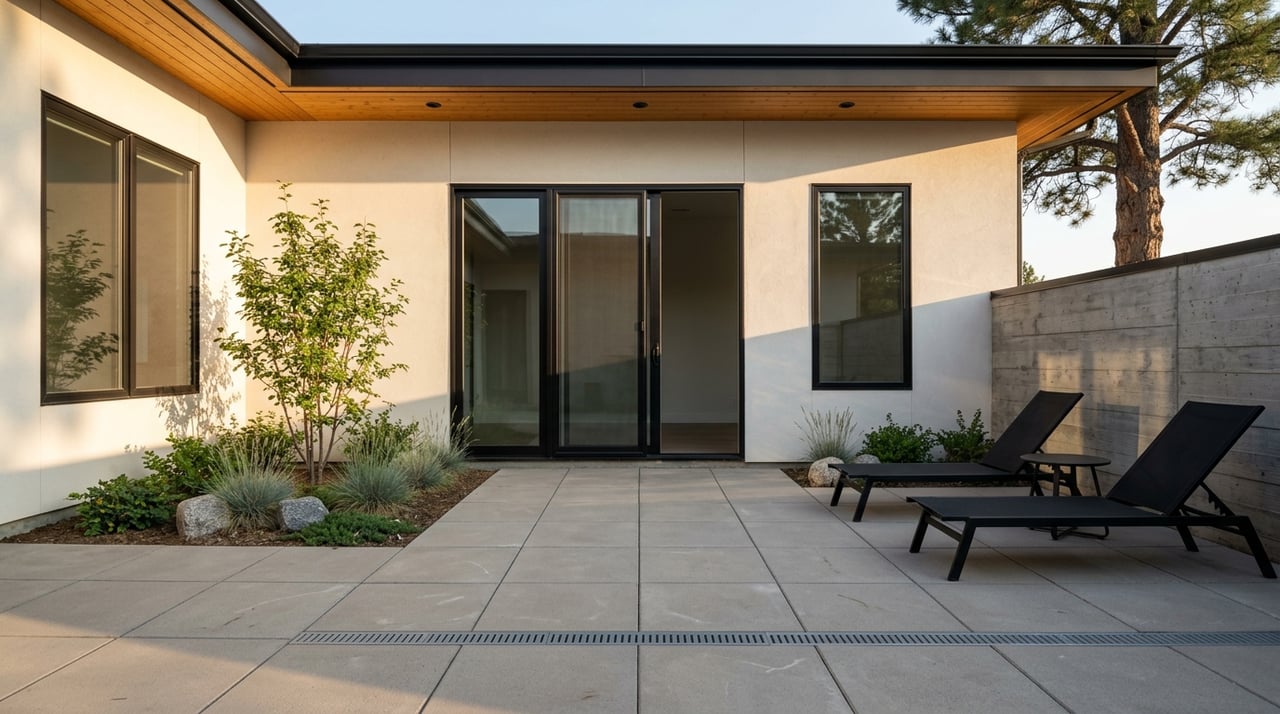
Why Longmont Living Works for Boulder Commuters
June 25, 2026
June 25, 2026
Thinking about living near Boulder without giving up convenience, character, or daily quality of life? If you work in Boulder or around the Boulder-area corridor, Longmont is worth a serious look. You may find that it offers a practical commute, a wider mix of home styles, and a lifestyle that feels more complete than many buyers expect. Let’s dive in.
If your work life is tied to Boulder, Longmont can function as a strong home base. The city sits on the Boulder/Longmont corridor, and city planning materials describe it as centrally located between Boulder and the broader Front Range.
That location matters in everyday life. Longmont’s 2020 Community Profile, based on 2019 data, reported an average commute time of 24.9 minutes. For many buyers, that places Longmont in the sweet spot between access and breathing room.
Longmont is still a car-oriented city in practice. The same community profile found that 76% of workers drove alone, while 2.8% used public transportation.
Even so, you are not limited to one way of getting around. Longmont offers a useful transit network that can support commuting, errands, and hybrid work routines.
The city says local buses are free on routes 323, 324, 326, and 327. RTD’s FlexRide also serves the city, which can add flexibility for local trips.
For Boulder access, the BOLT route connects Boulder and Longmont via CO 119. Looking ahead, the city’s 1st & Main transit project is intended to support future bus rapid transit to Boulder when completed in 2027.
Longmont also supports in-town movement beyond standard bus routes. RIDE Longmont provides on-demand trips within the city, which can make day-to-day logistics easier if you want options besides driving.
For Boulder-area professionals, that creates a helpful middle ground. You can live in a city where driving is common, while still having transit and on-demand services available when they fit your schedule.
One of Longmont’s biggest advantages is variety. If you are comparing it with Boulder, the conversation is often less about whether Longmont has appealing neighborhoods and more about which type of lifestyle you want.
The city’s planning framework divides Longmont into established neighborhoods and planned neighborhoods. That structure helps explain why the housing mix feels broader and more flexible than many nearby markets.
Established areas include McIntosh, Longmont Estates, Garden Acres, Loomiller, Sunset, Southmoor, Lanyon, Clark Centennial, Kensington, and the Central Business District. These areas often appeal to buyers who want a more rooted, established feel.
Planned neighborhoods include East Side, Lower Clover Basin, Upper Clover Basin, Schlagel, West St. Vrain, Airport, Pike, Quail, Longmont Tech Center, Terry Lake, McLane, and Westview. If you are looking for newer patterns of development or a more intentionally planned setting, these pockets may stand out.
Longmont’s 2020 Community Profile shows a housing stock that is still majority single-family detached. At the same time, the city also has meaningful shares of multifamily and townhome or duplex housing.
That matters if you want choices. You may be searching for a detached home with more space, a lower-maintenance townhome, or a location that balances design, price point, and commute. Longmont gives you more ways to make those trade-offs.
For many Boulder-area professionals, two parts of Longmont usually rise to the top. They are the places most likely to offer a blend of walkability, design interest, and access to daily amenities.
Downtown Longmont is described by the downtown organization as the heart of the community. It offers a mix of restaurants, shops, murals, galleries, parks, craft breweries, cideries, and distilleries, along with recurring events that support an active neighborhood feel.
The Longmont Creative District runs from 1st Avenue to Longs Peak Avenue. If you want a more connected, street-level lifestyle with easy access to local businesses and cultural spaces, this is one of the clearest places to start.
Longmont also has two National Historic Districts. Eastside generally sits between Fourth and Eighth avenues between Kimbark and Atwood, while Westside is between Third and Fifth avenues between Terry and Grant.
These areas are especially appealing if you value character and a walkable setting. In practical terms, this part of Longmont is often the best fit for buyers who prioritize older homes, established blocks, and proximity to restaurants, arts, and events over larger lots or newer construction.
If your style leans more design-forward, Prospect New Town deserves attention. Visit Longmont describes it as a New Urbanist neighborhood that emphasizes walkability and mixed-use spaces, with colorful homes, tree-lined streets, and nearby restaurants, boutiques, coffee shops, and art studios.
For buyers who want a newer-feeling neighborhood with personality, Prospect is one of Longmont’s clearest standouts. It offers a different experience from the historic core, but it can still deliver a lifestyle that feels connected and intentional.
Longmont is not built around just one housing story. Alongside its established neighborhoods and historic districts, the city still has room for infill and selected newer development.
The planning area covers about 19,500 acres, with 35.14% residential land, 30.3% parks and open space, and 13.13% vacant land. That mix helps explain why Longmont can offer both mature neighborhoods and opportunities for newer housing pockets.
The city’s planning materials and open-space materials also note early New Urbanist development in places such as Prospect and Quail Ridge. If you are looking for newer construction or a more planned neighborhood experience, Longmont gives you real options rather than just a few isolated projects.
A lot of buyers first look at Longmont as a commute decision. Once you spend more time studying the city, it often becomes a lifestyle decision too.
Longmont’s civic amenities are deeper than many professionals expect from a Boulder alternative. That broader foundation can make daily life feel easier, fuller, and more local.
According to the city’s 2020 profile, 30.3% of the planning area was parks and open space. That is a meaningful share of land, and it helps explain why trails, greenways, parks, and outdoor access are part of the normal routine here.
If outdoor time is important to you, Longmont supports that habit in a practical way. You are not relying on occasional weekend outings alone.
Longmont’s downtown mix supports a live-near-what-you-use lifestyle. Restaurants, shops, breweries, galleries, murals, and events all contribute to a city core that feels active and usable.
Beyond downtown, the city offers well-developed public amenities. The Longmont Public Library provides books, digital resources, programs, and meeting rooms, while the Longmont Museum offers performances, films, classes, and Historic Longmont walking tours.
If you split your time between home and the office, Longmont checks an important box. In February 2025, the city said NextLight served more than 28,000 homes and businesses, roughly two-thirds of Longmont, and described the network as community-owned fiber.
That kind of infrastructure can make a real difference. For hybrid professionals, remote workers, and households with heavy day-to-day internet use, dependable high-speed service is not a luxury. It is part of how a home functions.
When you compare Longmont with Boulder, the key question is usually not whether Longmont has enough amenities. It does.
The more useful question is what kind of daily environment fits you best. Boulder offers a tighter urban feel, while Longmont provides a broader mix of historic districts, established neighborhoods, planned neighborhoods, and transit-oriented pockets.
For some buyers, that means more space. For others, it means access to newer-feeling homes, a different pace, or a downtown experience that still feels active without mirroring Boulder exactly.
If you are weighing Longmont seriously, it helps to evaluate it through a few simple lenses:
Longmont tends to work especially well when you want options. You can pursue walkability in the downtown core, design-forward living in Prospect, or more conventional neighborhood patterns in other parts of the city.
If you want help sorting through those choices with a clear eye on lifestyle, design, value, and commute, Candace Newlove Marrs offers a boutique, high-touch approach tailored to how you want to live.
Stay up to date on the latest real estate trends.
Combining decades of real estate expertise with a passion for making dreams come true, Candace simplifies the journey to discovering your ideal home.