Boulder Mountains Wildfire Insurance: What to Check Before Closing
October 1, 2026
October 1, 2026
On July 1, 2026, two pieces of Colorado law took effect on the same day, and neither one made headlines in Nederland or up Sugarloaf Road. Together, though, they changed the question a Boulder Mountains buyer needs answered before writing an offer. It is no longer just what the seller wants for the house. It is whether an insurer will cover it at all, and at what price.
That question used to surface late in a transaction, sometimes days before closing, when a lender asked for proof of homeowners coverage and the buyer discovered the market had quietly moved against them. The new law does not eliminate that risk. It makes the risk visible earlier, which is not the same thing as making it smaller.
House Bill 25-1182, signed by Governor Polis in May 2025, reached full effect on July 1, 2026. Under the new rule, any insurer using a wildfire risk model or catastrophe score to underwrite, price, non-renew, or surcharge a Colorado homeowners policy has to send an annual written notice disclosing that score, the classification behind it, and any mitigation discounts available. If a carrier's model does not already account for parcel-level or community mitigation work, the law requires the carrier to offer a discount when a homeowner can document that work, and it gives homeowners a formal path to appeal a score they believe is wrong.
The same date brought a second change: the Colorado Wildfire Resiliency Code reached full enforcement statewide. It sets construction standards for new homes and additions over 500 square feet inside mapped wildland-urban interface zones, which covers most of the Boulder Mountains. It is not retroactive. An existing home with no qualifying addition is exempt, though anyone planning a significant remodel in the foothills should assume the code now applies to that project.
The Colorado Division of Insurance is still actively working through what this means in practice. The department held a virtual town hall on September 16 to walk homeowners through the wildfire insurance changes, a sign that the rollout is still being explained to the public nearly three months after the law took effect.
The part of HB 25-1182 that gets the most attention, the right to see your own risk score, is also the part most likely to be misunderstood. The law creates transparency. It does not create an affordability floor or a coverage guarantee. Insurers still retain the right to decline a policy outright, and a risk score that accurately reflects a homeowner's completed mitigation work can still produce a premium far above what that homeowner paid five years ago.
The scale of that increase in Colorado's wildfire zones has been well documented. Statewide, average premiums for standard coverage rose 57.9 percent between 2018 and 2023, reaching $4,072 a year for a typical $300,000 policy, according to a Colorado State University analysis, and Colorado is now ranked the sixth most expensive state in the country for homeowners insurance. In Boulder County's foothills and along the I-70 corridor, the increases have run well past the statewide average, with reported jumps of 150 to 300 percent in some wildfire-prone zips and annual premiums exceeding $10,000 on individual properties. One Colorado mountain homeowner near Idaho Springs saw a single renewal jump from $4,677 to $34,600, a premium equal to 740 percent of the previous year's premium in one cycle.
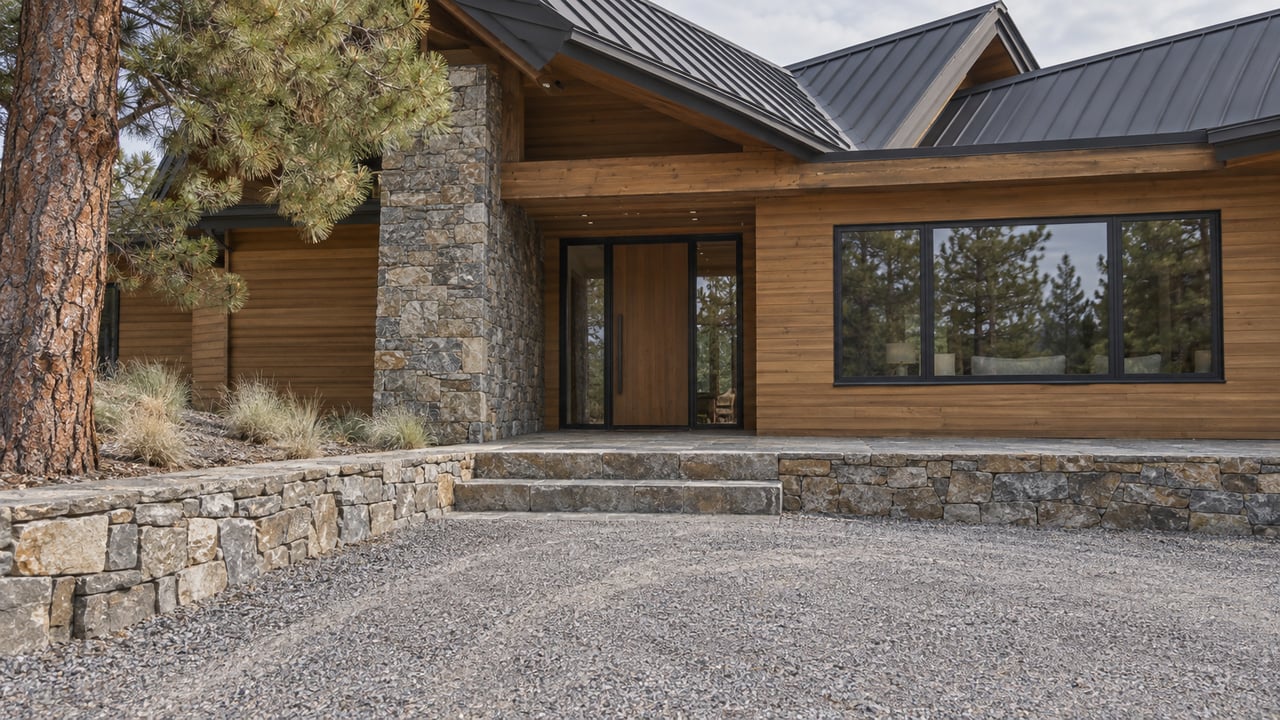
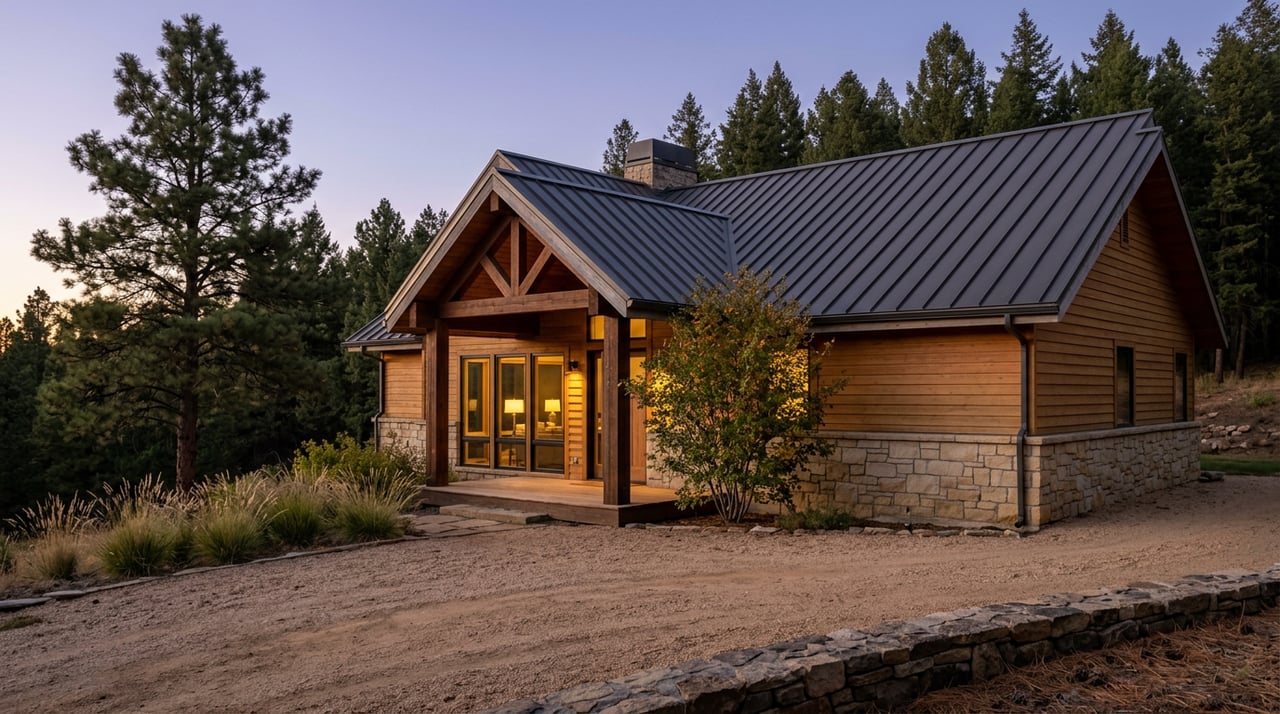
For a buyer evaluating a mountain-modern home off a gravel access road in Wildfire Zone 1, that context matters more than the listing price. The mortgage payment is fixed at closing. The insurance line is not, and under the new disclosure rule, a buyer can now ask to see the number behind it before they are locked into a contract.
The Colorado FAIR Plan is the state's insurer of last resort. It is worth understanding its limits going in.
A University of Colorado study of homes affected by the December 30, 2021 Marshall Fire, the most destructive wildfire in state history at more than 1,000 structures lost, found that three in four of those homes were underinsured relative to their actual rebuild cost. The Marshall Fire happened on the plains east of the foothills, not in the mountains, but it is the event that reshaped how every carrier in the state prices wildfire exposure, including exposure in Boulder's foothill and mountain communities that had never filed a wildfire claim.
Not all documentation carries equal weight with an underwriter. Here is roughly how the three most common paths compare for a Boulder Mountains property.
| Path | What it takes | What it actually buys you |
|---|---|---|
| Wildfire Partners certificate | Free county assessment, a prioritized action list, completed work, and a follow-up inspection. Recertification required if more than five years have passed since the last assessment. | Explicit recognition from Allstate, State Farm for existing customers, and USAA as documented mitigation, which strengthens both a new application and an appeal under HB 25-1182. |
| IBHS Wildfire Prepared Home designation | Third-party verification against a base ember-resistance standard or a higher Plus level covering flame and radiant heat exposure. Expanded to Colorado in April 2026. | A research-backed designation some carriers weigh alongside or in place of a county certificate, useful for properties outside Boulder County's program area. |
| Self-documented mitigation (photos and receipts only) | Dated photographs of cleared defensible space, roof and vent upgrades, and contractor invoices, without a formal inspection. | Usable as evidence in a risk-score appeal under the new law, but it carries less weight with an underwriter than a completed third-party certificate. |
Boulder County's Wildfire Partners program, run in partnership with CSU Extension, does not charge for the assessment or the certificate itself, and it offers financial help toward the mitigation work: a standard award covering half of forestry contractor costs up to $2,000, with need-based awards covering up to the full cost for eligible homeowners. The City of Boulder runs a separate, Climate Tax-funded program called the Wildfire Resilience Assistance Program for home hardening and vegetation work inside city limits. Its current funding cycle was fully committed as of early 2026, though the program has reopened in past cycles and is worth checking again before assuming it is unavailable.
Homeowners insurance can affect the mortgage-closing timeline, regardless of how clean the inspection came back or how solid the appraisal looked. That is the part of this story that belongs on a transaction calendar, not just an insurance renewal notice.
The practical fix is sequencing. A buyer writing an offer on a foothills or mountain property should be getting insurance quotes during the due diligence period, not after the appraisal contingency has already expired. A seller who already holds a Wildfire Partners certificate or an IBHS designation has paperwork that now does double duty: it is fire safety documentation, and it is evidence a buyer's lender will want to see before they will commit to funding the loan.
Does a Wildfire Partners certificate expire? Yes. If it has been more than five years since the last assessment, Boulder County requires a new one before the certificate is considered current.
Does the July 2026 construction code apply to a home I'm buying as-is? No. The Colorado Wildfire Resiliency Code applies to new construction and to additions or alterations over 500 square feet inside a mapped wildland-urban interface zone. An existing home with no qualifying project underway is exempt.
Can I see a property's wildfire risk score before I'm under contract? A buyer would generally need the seller's cooperation or their own new-application quote to see a number tied to that specific parcel. Either way, asking early beats finding out at underwriting.
Does HB 25-1182 cap what an insurer can charge? No. It requires disclosure of the score, recognition of documented mitigation, and a path to appeal. It does not set a price ceiling, and a carrier can still decline to write a policy at all.
Insurance used to be the paperwork that happened quietly in the background of a mountain home sale. In the Boulder Mountains this year, it is closer to a fourth contingency, one that never made it onto the standard contract form but shows up at the closing table regardless. If you are buying, selling, or thinking through timing on a foothills or mountain property, Candace Newlove Marrs can walk through what a specific parcel's mitigation status and insurance picture look like before you are locked into a date.
This article is general information, not legal, tax or financial advice. Consult a qualified professional about your situation.
Stay up to date on the latest real estate trends.

Combining decades of real estate expertise with a passion for making dreams come true, Candace simplifies the journey to discovering your ideal home.