Newlands Buyers: Check the House's Age Before You Check for a Landmark Plaque
August 27, 2026
August 27, 2026
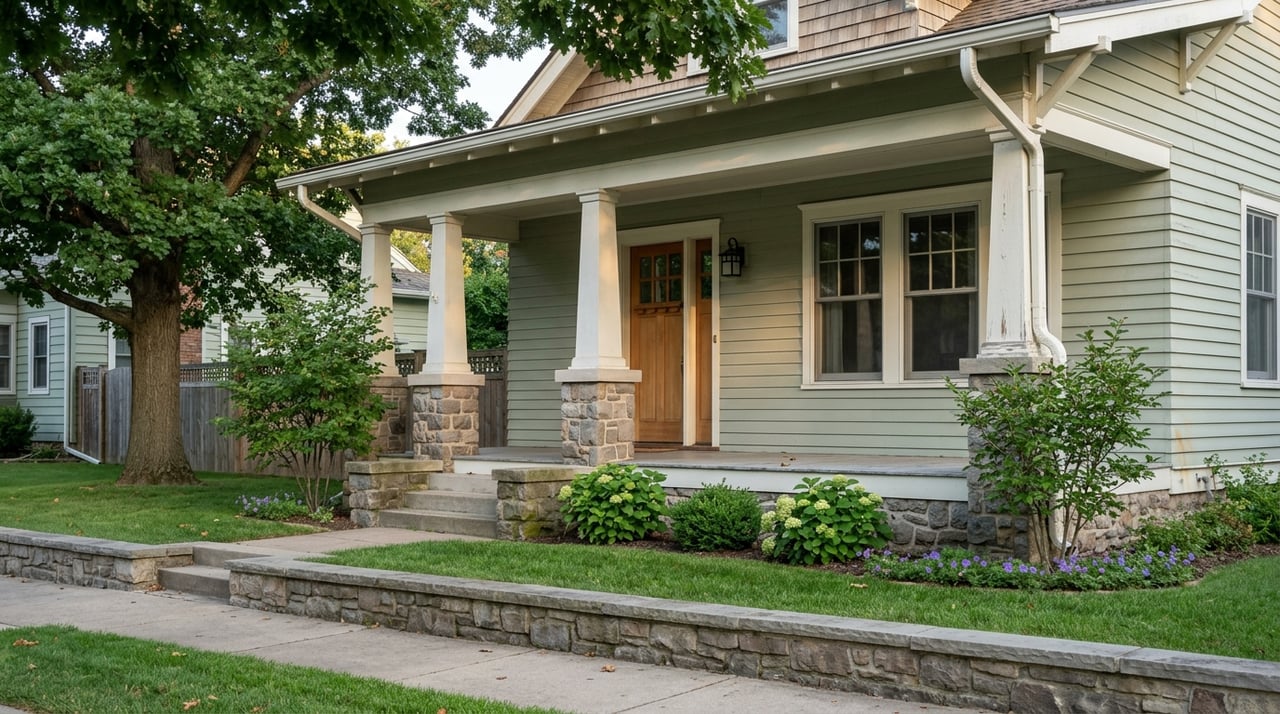
Walk two blocks in North Boulder's Newlands neighborhood and you'll likely pass a small bronze plaque bolted to a Craftsman bungalow, marking it as a designated landmark or a contributing structure in the historic district. Most buyers see that plaque and mentally file the house under "harder to renovate." Then they look at the plain 1920s foursquare next door, unmarked, and assume it's the freer option.
That assumption is backward more often than not, and it costs people real money and real time once they're under contract.
Newlands was platted in 1891 on farmland William Newland had purchased two decades earlier, laid out with the garden-sized lots and rural feel that still shape the neighborhood today. Most of its housing stock, the Craftsman bungalows and Foursquares that give the neighborhood its character, was built between the 1890s and the 1930s. That means the overwhelming majority of Newlands homes clear a specific age threshold in the City of Boulder's code, whether or not anyone ever nominated them for landmark status.
Boulder requires Historic Preservation Demolition Review for any building over 50 years old when proposed work meets the code's definition of demolition, regardless of designation. A house without a plaque, without a mention in any historic district survey, still has to clear this review if the scope of work qualifies. Age triggers the review. A landmark plaque does not create it, and its absence does not exempt a homeowner from it.
The definition catches people off guard because it's broader than most buyers expect. Under Boulder's code, proposed work counts as demolition if it removes more than 50 percent of a building's roof, or if it removes any portion of a street-facing wall. That second trigger is worth sitting with. It is not 50 percent of the street-facing wall. It's any portion, which means enlarging a window opening, removing an enclosed porch, or building a new wall in front of an existing street-facing wall can all pull a project into review, even on a house nobody has ever called historic.
For smaller, in-kind repairs, city staff can often approve the work administratively within days. Larger changes go to the full Landmarks Board, which meets the first Wednesday of every month, with the agenda posted ten days in advance. That timeline matters for anyone planning a renovation around a closing date or a construction season. A buyer who assumes an unplaqued house skips this process entirely can find themselves waiting on a board calendar they never budgeted for.
Flip to the plaqued house, and the story changes in the owner's favor in ways that rarely make it into a listing description. Rehabilitation work on an individually landmarked property or a contributing structure in a historic district can qualify for a 20 percent Colorado state income tax credit on qualifying costs, capped at $50,000 per property, and that credit can be spread across a ten year period. The city also waives its sales tax on construction materials when at least 30 percent of the material value goes toward the building's exterior.
Those are dollar figures a buyer can run against a renovation budget before writing an offer. A kitchen remodel that touches only the interior won't trigger the credit, since it applies to exterior and structural rehabilitation. But a porch restoration, window rehabilitation, or exterior repair on a landmarked Newlands bungalow can offset real cost, something the plain house next door simply can't access no matter how carefully its owner restores it.
Here's the mechanism that most buyer conversations skip entirely, and it's the one worth understanding before choosing between two otherwise similar Newlands lots.
Boulder caps a standard, market-rate detached accessory dwelling unit at 800 square feet. A homeowner who agrees to cap the ADU's rent at 75 percent of area median income can build a larger unit, up to 1,000 square feet detached, or up to 1,200 square feet (or two-thirds the size of the main home, whichever is smaller) if it's attached. That's the trade the city offers: bigger footprint in exchange for an income restriction on the rent you can charge.
The part that catches people off guard is that Boulder extends that same larger footprint, the 1,000 square foot detached allowance, to any property that's an individual landmark or a contributing structure in a historic district, with no rent restriction attached at all. The plaqued Craftsman that looked like the more restricted purchase can legally support a bigger backyard unit than the unplaqued house across the street, and the owner can rent that unit at whatever the market supports.
| ADU type | Max detached size | Rent restriction |
|---|---|---|
| Standard, market-rate | 800 sq ft | None |
| Affordable ADU | 1,000 sq ft | Rent capped at 75% of area median income |
| Individual landmark or contributing structure | 1,000 sq ft | None |
For a buyer weighing a landmarked Newlands bungalow against a newer, unplaqued infill house on the same block, this is the number that should be in the spreadsheet, not just the aesthetic preference for original woodwork.
Layer a second, more recent change on top of that. Boulder's own accessory dwelling unit rules, updated by City Council in February 2025, took effect for any ADU proposed on or after March 8, 2025. Those updates removed several requirements that used to constrain how an ADU could be used, including the owner-occupancy requirement that once meant someone had to live in either the main house or the ADU. That restriction is gone for standard long-term rental. A Newlands owner can now rent out the main house and the ADU separately, long-term, without living on site at all.
That local change moved ahead of a statewide floor. Colorado's House Bill 24-1152 took effect June 30, 2025, and requires every "Subject Jurisdiction," a list that includes Boulder, to allow at least one ADU by right on any lot zoned for a single detached home, while stripping HOAs of the power to ban ADUs outright. Boulder had already gone further than the state minimum by the time the state law caught up.
For a buyer running the numbers on a Newlands property as a long-term hold or an income-generating purchase, these two changes together mean the flexibility that exists today didn't exist two years ago, and the landmark size bonus makes an older, designated house a genuinely competitive option against newer construction rather than a compromise.
Newlands isn't uniform, and where a given house sits changes what matters most. The northwest edge, closest to Wonderland Lake Trailhead and the Foothills Trailhead, tends to draw buyers who prioritize trail access. The blocks around North Boulder Park suit families who want open turf, a playground, and easy transit access nearby. The southern edge sits closest to downtown Boulder, since Newlands begins just north of the core.
On any of those blocks, the practical due-diligence order is the same. Confirm the build year first, since most Newlands houses will clear the 50 year threshold regardless of what the listing says about historic status. Then check the city's landmark and historic district map to see whether the specific parcel is individually designated or recognized as contributing. Only then does it make sense to price out a renovation or an ADU plan, because the answer to that second question determines the size ceiling and the tax treatment, not a guess based on whether the house has a plaque out front.
Does landmark designation lower a home's resale value? The city's own guidance is direct on this: designation doesn't change a property's zoning or allowed uses, and it has no bearing on how the property is assessed for tax purposes. Value concerns are worth discussing with an agent who knows the specific block, but designation itself isn't the liability many buyers assume.
Can I still build an ADU if the house isn't landmarked at all? Yes. ADUs are allowed by right on qualifying lots across most of Boulder's zoning districts. Landmark or contributing status doesn't determine eligibility, only the size ceiling.
Does interior remodeling trigger the same review as an exterior project? Generally no. The Landmark Alteration Certificate process and the demolition review threshold are built around exterior and structural changes, particularly anything touching a street-facing wall or a significant share of the roof. Interior work typically moves through the standard building permit process instead.
If you're weighing a Newlands purchase against its renovation or rental upside, or trying to figure out what a specific lot can actually support before you write an offer, that's exactly the kind of groundwork worth doing with someone who's spent decades on the financing and transaction side of this market as well as the sales side. Candace Newlove Marrs works this exact terrain, North Boulder's historic pockets included, and can walk you through what a given property's status really means before you're locked into a contract. Schedule a personal consultation to talk through the specifics of the block you're watching.
Stay up to date on the latest real estate trends.
Combining decades of real estate expertise with a passion for making dreams come true, Candace simplifies the journey to discovering your ideal home.